10 Things I’ve Learned About RV’s

1. Travel Trailers vs. Fifth Wheels: What’s the Difference?

When it comes to RVing, two of the most popular options are travel trailers and fifth wheels. While they both offer a mobile home on wheels, there are some key differences to consider.

  • Towing: Travel trailers are towed behind a vehicle using a hitch, while fifth wheels connect directly to the bed of a pickup truck. This means fifth wheels offer better maneuverability and stability, especially in windy conditions.
  • Size: Fifth wheels tend to be larger than travel trailers, making them a good choice for families or those who prefer more space.
  • Weight: Fifth wheels are generally heavier than travel trailers, so you’ll need a larger tow vehicle.

2. Connecting and Disconnecting Power

Both travel trailers and fifth wheels require electricity to power their appliances and lights. The connection process is similar, involving plugging the RV’s power cord into a campsite’s electrical outlet. However, there are different types of electrical outlets at campgrounds, so it’s important to ensure your RV is compatible.

3. Airstreams: Timeless Classics

Airstreams are iconic travel trailers known for their sleek, aerodynamic design and durability. These RVs are often passed down through generations, as they are built to last.

4. Airstream Dealerships: A Limited Supply

Unlike other RV brands, Airstream dealerships are not as widespread. In fact, there may only be one Airstream dealer in a particular state. This limited availability can make it challenging to find a new or used Airstream, but it also adds to their exclusivity.

5. Winterizing Your RV: The Pink Fluid Mystery

Preparing your RV for winter is essential to prevent freezing and damage. This process, known as winterizing, involves draining the water system and adding a pink antifreeze solution. This fluid is safe for your RV’s pipes and plumbing but should not be consumed.

6. RV Rentals: A Convenient Option

If you’re not ready to commit to buying an RV, renting is a great way to try it out. Bayley’s Campground in Maine offers RV rentals, making it easy to explore without the hassle of owning your own camper.

7. Cortes Campers: A Unique Design

Cortes Campers are known for their innovative design, which is inspired by boats. This unique construction makes them easy to clean and maintain, as they can be simply sprayed out with a hose.

8. Popular RV Floor Plans

When choosing an RV, it’s important to consider your needs and preferences. Some of the most popular floor plan options include:

  • Bunkhouse: Ideal for families with children, bunkhouse floor plans offer separate sleeping areas.
  • Rear Kitchen: This layout places the kitchen at the back of the RV, providing a spacious living area.
  • Rear Living Room: Similar to the rear kitchen, this floor plan features a large living area at the rear of the RV.
  • Front Living Room: This layout places the living area at the front of the RV, offering panoramic views.

9. Camper Liquidators: A Secondhand Option

If you’re looking for a more affordable RV, Camper Liquidators is a great place to start. Pete’s RV Center specializes in selling used RVs that are over a certain age.

10. Class A, B, and C Motorhomes: Understanding the Differences

In addition to travel trailers and fifth wheels, there are also motorhomes. These RVs are self-contained vehicles that combine a living space with a driving compartment. There are three main types of motorhomes:

  • Class A: The largest and most luxurious type of motorhome, offering all the comforts of a home on wheels.
  • Class B: Smaller and more maneuverable than Class A motorhomes, often referred to as “van campers.”
  • Class C: A mid-sized option that combines features of Class A and Class B motorhomes.

By understanding the different types of RVs and their unique features, you can choose the perfect one to suit your needs and lifestyle. Whether you’re a seasoned camper or a first-time RVer, there’s an RV out there waiting for you!
RV Floor Plan Basics

Considering purchasing a new or used RV? Do you want a motorhome, travel trailer, fifth wheel, or toy hauler? There’s a lot to consider when choosing the right RV for you. Here’s a quick guide to RV floor plans, and how to choose between them. 

Motorized or towable?

The very first choice you will need to make, do you want to drive your RV or tow it? There are advantages and disadvantages to both. If you’re leaning toward towing, check out our towing capacity guide to make sure your vehicle can tow your next RV.

What kind of motorhome?

Just like with towables, size matters in motorhomes. There are three main types of driveable RVs: Class A, Class B, and Class C, motorhomes, all of which differ in size and shape. 

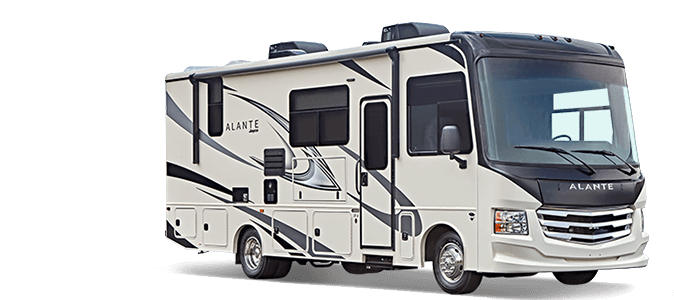
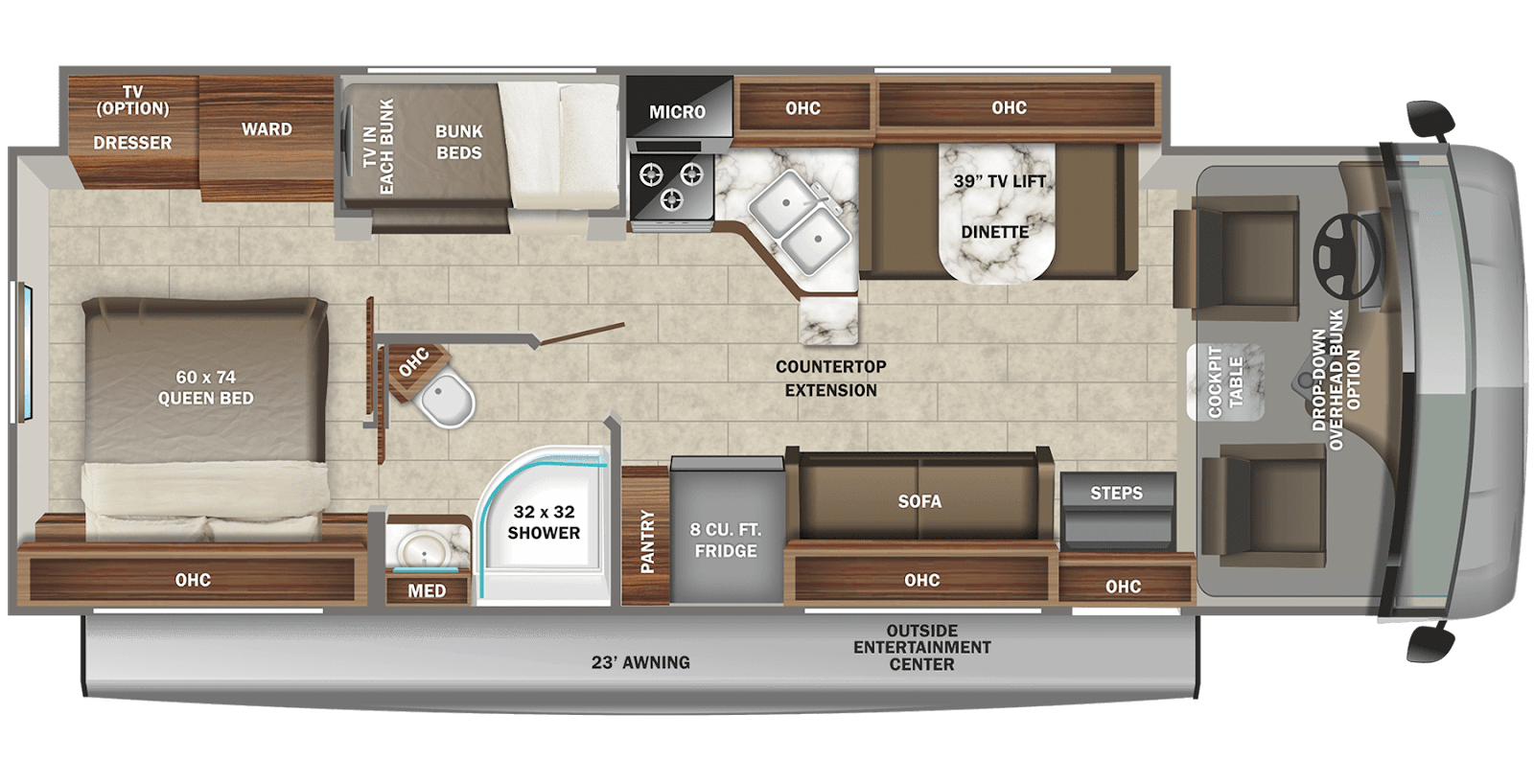
The Jayco Alante 29F is one of our most popular Class A motorhomes, and as you can see, it resembles a bus that comfortably fits a family inside. Many Class A RVs use diesel instead of standard gasoline, and come with many luxurious features that make them a higher priced option than most Class C’s.

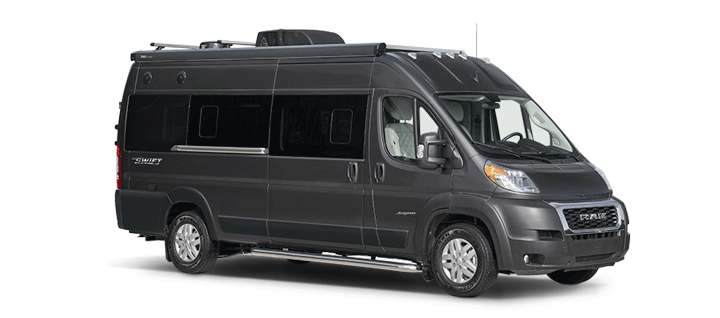
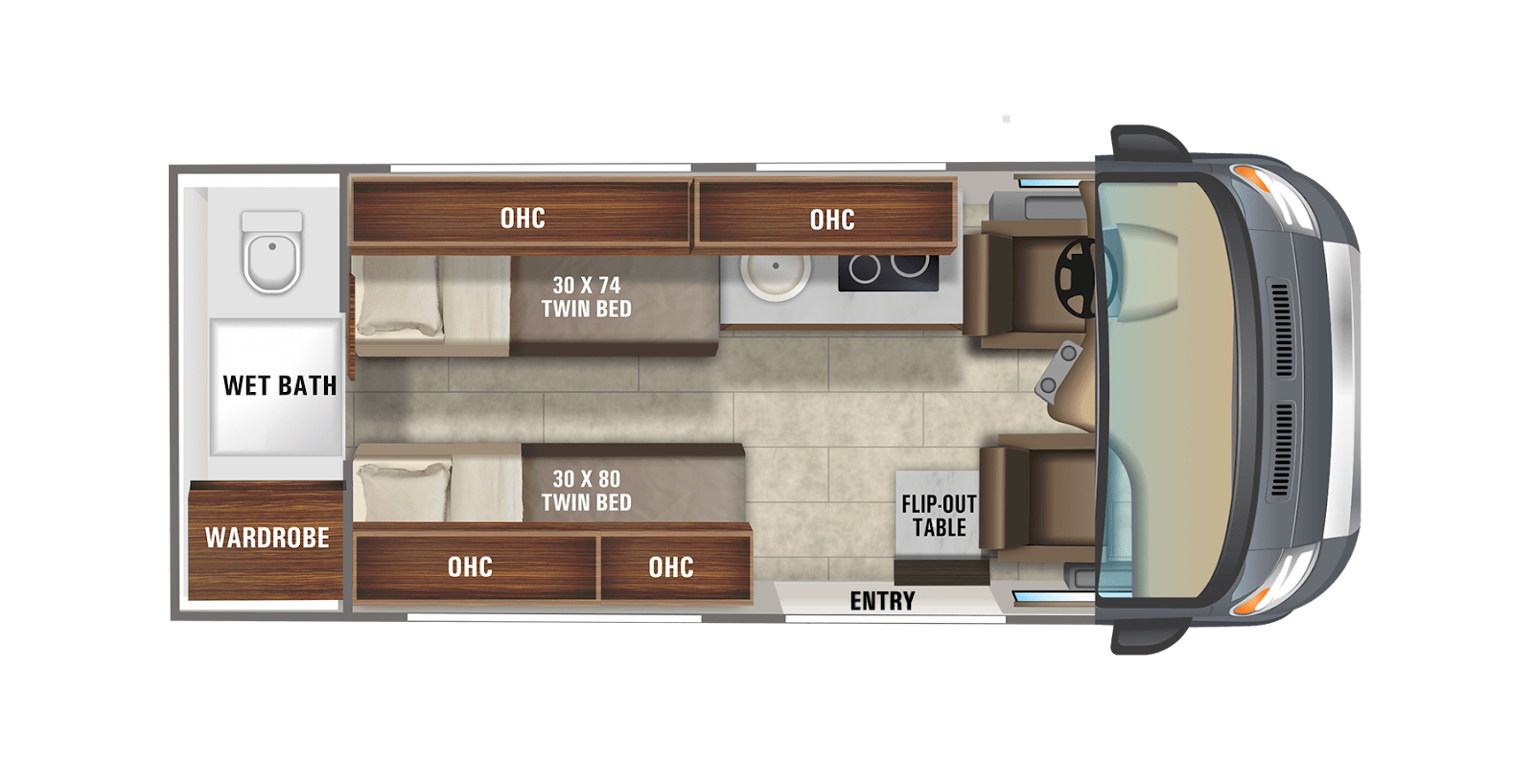
The Jayco Swift 20T is an example of a Class B RV, which runs significantly smaller than Class A or Class C motorhomes, and resembles a typical passenger van on the outside. On the inside, there’s enough room for a couple to vacation out of, while keeping the vehicle small for driveability. Many campers even boondock in more rugged editions of Class B’s, such as the Jayco Terrain, an adventure Class B. 

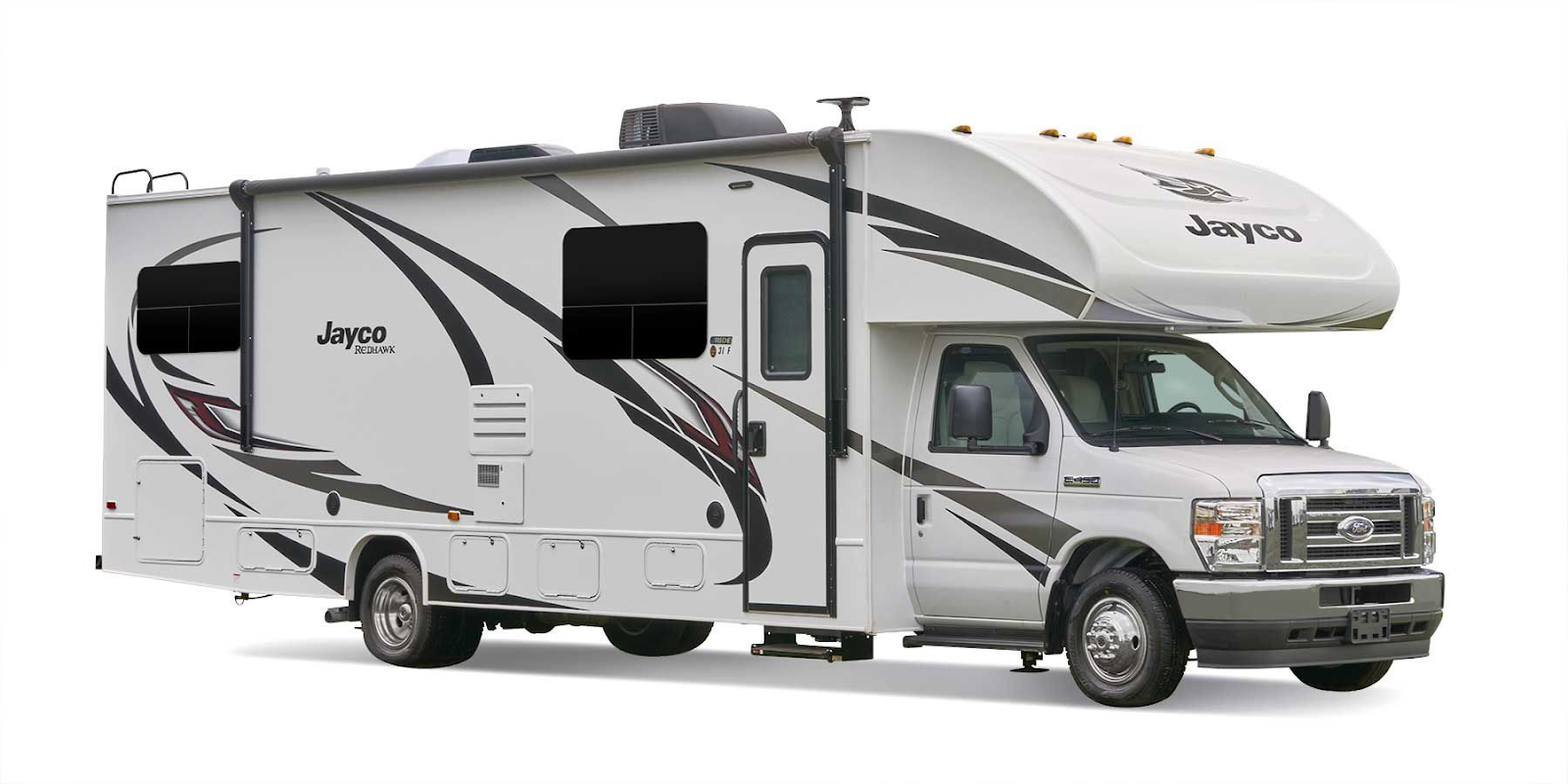
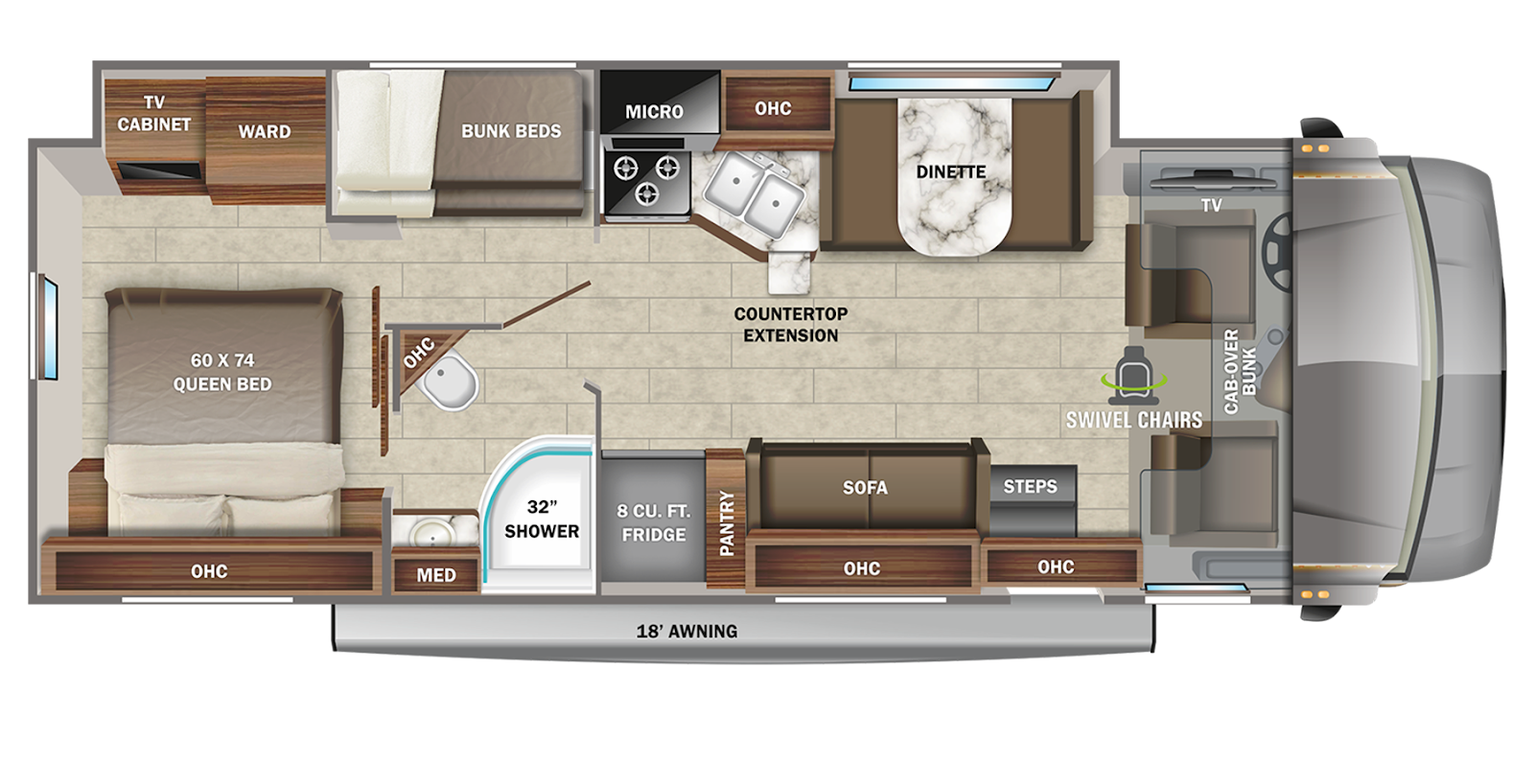
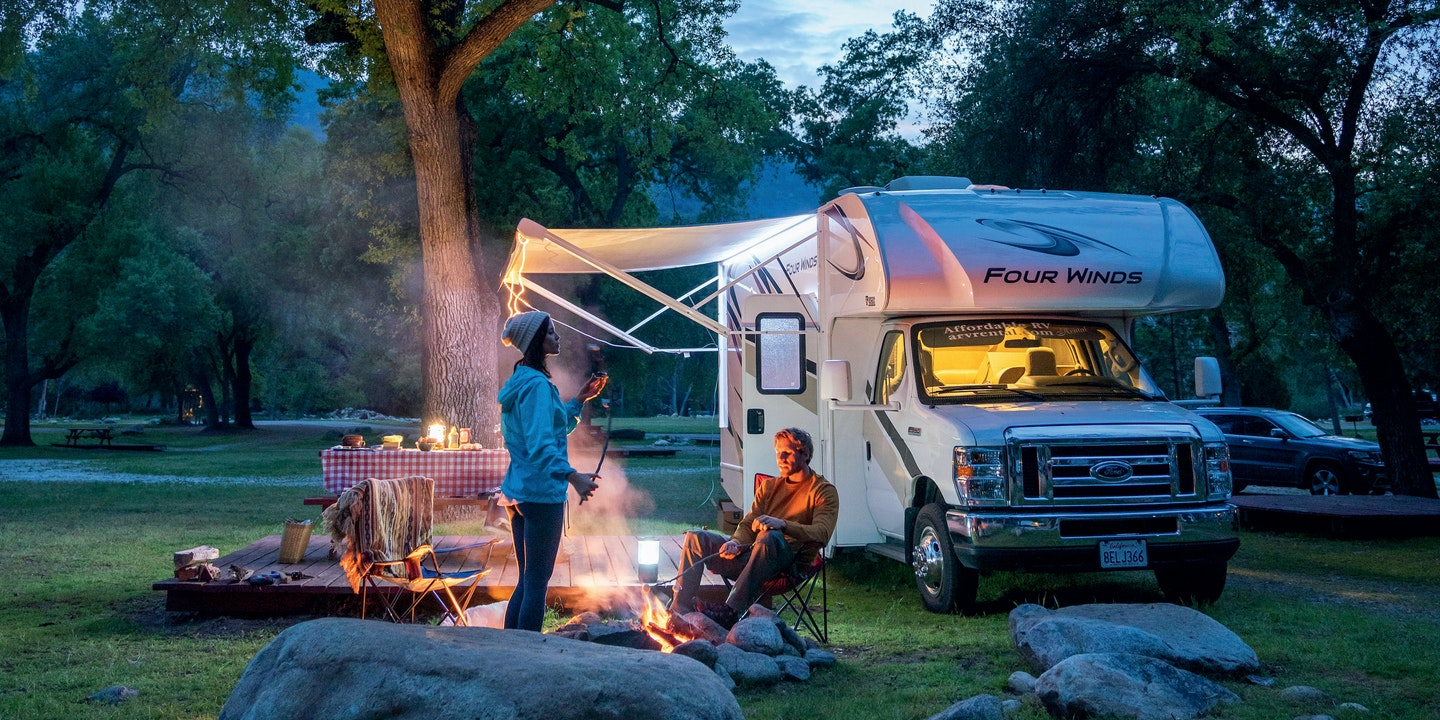
The popular Jayco Redhawk 31F is a well known example of a Class C RV. Known for their cab over bunks hanging over the driver’s seat area, Class C’s are the original motorhome, and their high quality for families or couples has stood the test of time. They come in gasoline or diesel, depending on the model, and drive more like a large truck than the more bus shaped Class A’s. 

What kind of travel trailer?

There are even more options for travel trailers than motorhomes, not including fifth wheels, which are towed differently than travel trailers and run considerably larger. 

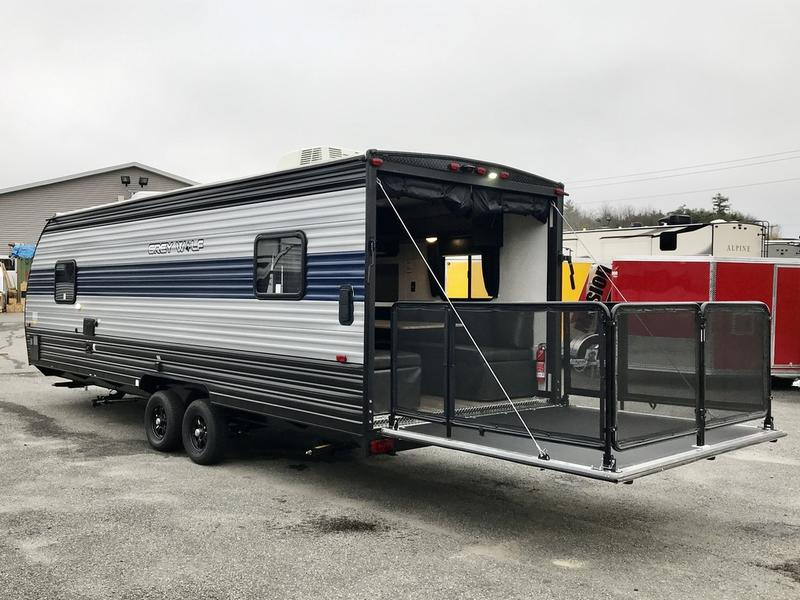
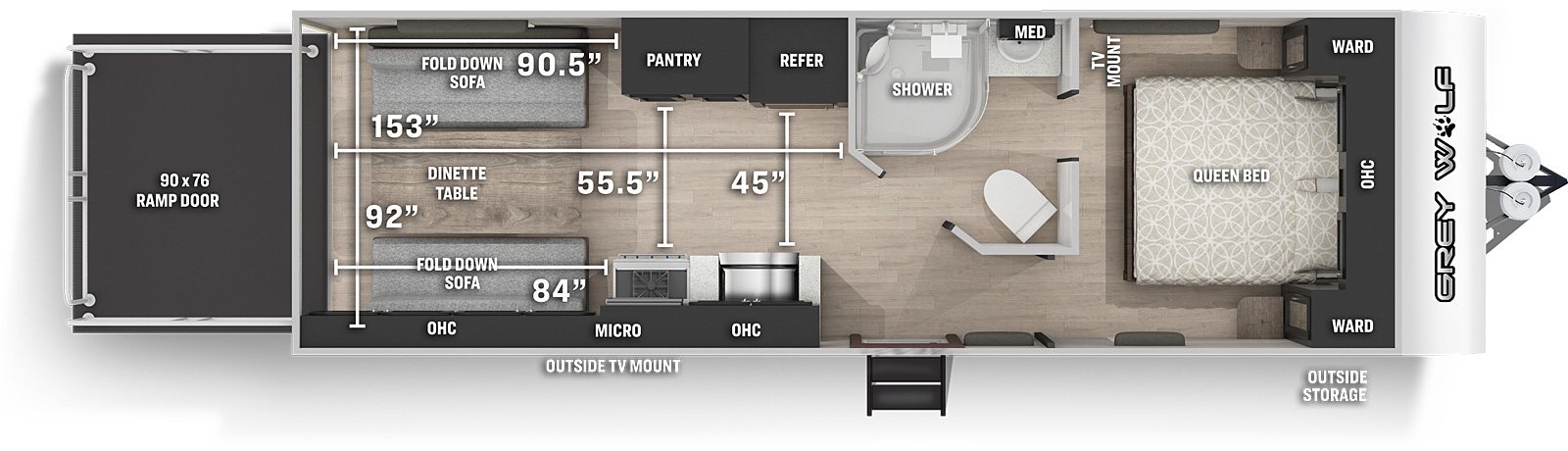
The Forest River Grey Wolf 22RR is considered a toy hauler, which is a travel trailer designed to fit other vehicles inside, such as motorcycles or four wheelers. The ramp door for vehicle entrance is on the rear of all Forest River toy haulers, so that ramp door also doubles as a party deck! Many toy haulers come with no slides, to keep the weight of the RV down to account for the heavy vehicles inside. These are great for couples or a small family who values outdoor adventures. 

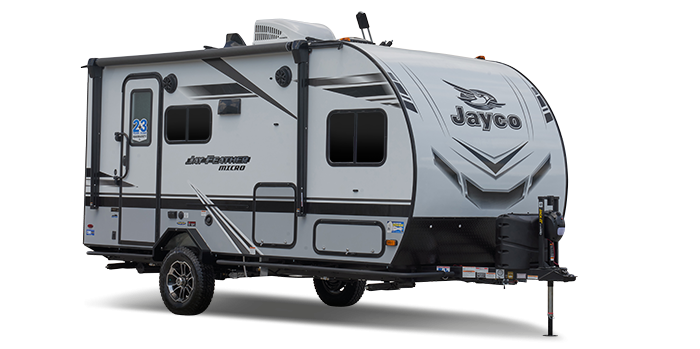
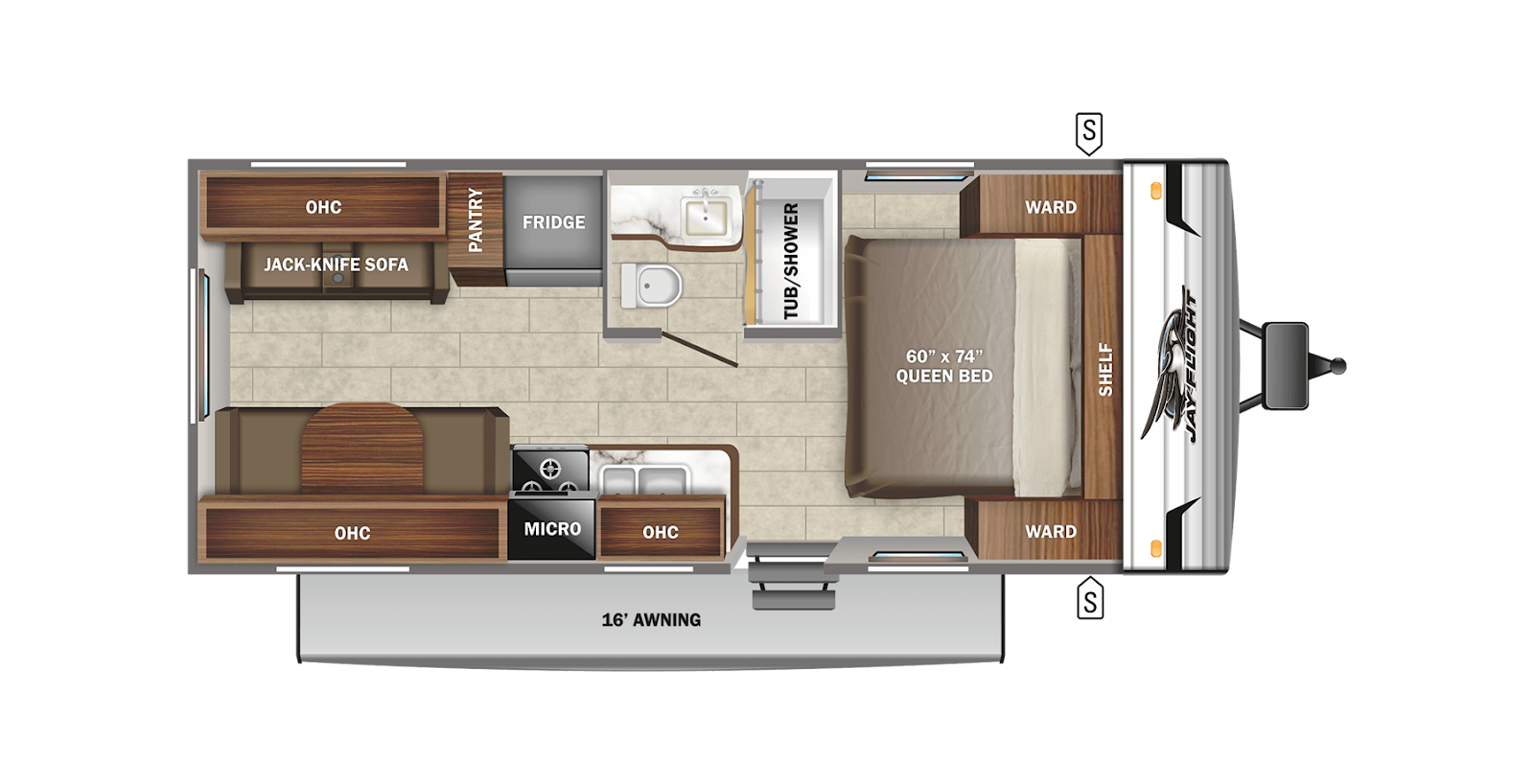
Single axle trailers have just one pair of wheels holding them up, such as this on Jayco Jay Feather Micro 199MBS. Only very lightweight travel trailers are constructed this way, and most single axles are for couples. They’re the easiest trailers to tow and park, as well as the lightest. 

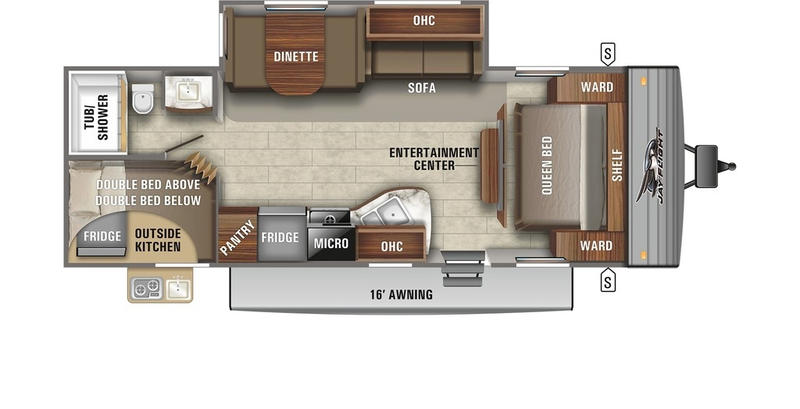
The 2022 Jayco Jay Flight SLX 8 267BHS is a double axle travel trailer due to its four wheels. It’s also an example of a bunkhouse floor plan, due to the bunk beds in the rear that serve as an additional sleeping area to the queen bed up front. Bunkhouses are great for families, particularly Jayco’s double bunk bed setup which creates spacious sleeping areas for all family members. However, RVers who travel solo or as a couple tend to prefer floor plans without bunkhouses, to have more room in their kitchen or living areas. 

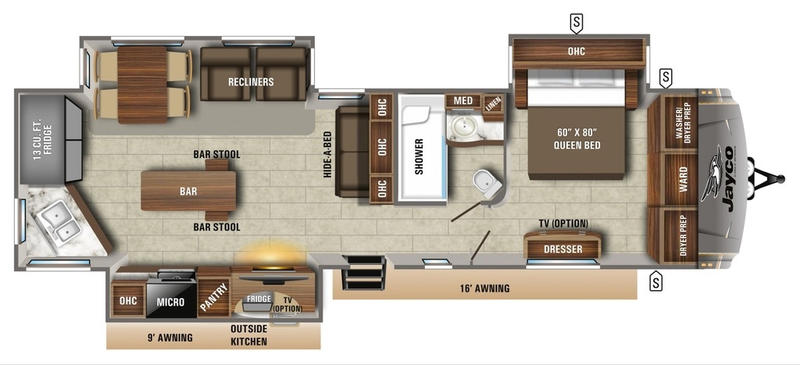
The Jayco Eagle 332CBOK is a large couple’s travel trailer, which lacks bunks and has space for a larger living area. 

Now that you know the basic floor plan styles of motorhomes and travel trailers, you are ready to browse more detailed varieties of RV floor plans. For more RV tips, tricks, and news, follow our Pete’s RV Info Blog today!

RV Refrigerator Guide

Cooling down your food and drinks in the summer is no joke, be informed about RV refrigeration! 

The three most common types of refrigerators you will see in a RV are 12 volt, gas electric style, and residential. Here’s a quick guide on each:

Gas Electric Fridge

The popular gas electric style of refrigerators are the best kind to use for boondocking. They can cool and freeze food running off of just propane or electricity, without any enhancers necessary. They do take 3 – 6 hours to efficiently cool down, and your RV must be perfectly level in order to ensure that the refrigerator technology can cool at the campsite. 

12 Volt Fridge

12 volt refrigerators operate from the 12 volt battery on your RV. They are efficient with power usage, but they are smaller in size in order to keep up this efficiency. If you don’t have an enhanced battery system or solar setup on your RV, you may want to avoid using a 12 volt fridge on a boondocking trip, since this fridge pulls right from your RV battery. 

Residential Fridge

Full residential refrigerators are increasing in popularity in many fifth wheels and large travel trailers. They’re often as large as refrigerators in a standard home, they cool reliably, they don’t use a lot of power, and are far less expensive than gas electric refrigerators. Being a larger refrigerator, it is more difficult to remove them from RVs, and a converter is required to power them. 

Each type of refrigerator is very reliable, many RV fridges last for decades at the same quality as the day of purchase. The refrigerator you choose is based on your own boondocking habits and power needs of your RV. 

For more RV tips, tricks, news and info, follow our Pete’s RV Info Blog today!

Tips for RV Camping at the Beach

It’s that time of year again: the season of hot weekends where you want to enjoy both the campground, and the shores of your favorite beach or lake. Why not both? Here’s some tips for beach camping. 

The first thing a beach skeptic might point out is, there will be sand everywhere! To help tame this within your RV, put an outdoor rug in front of the door for feet to be wiped on. Next to the rug, you can make a little foot wash station with a simple bucket of water and a towel so people can wash feet and legs before dirtying up the RV. 

The most important part of sand prevention in the RV world is keeping sand out of your gray water tank. You’ll want to hose off outside as much as possible before showering and filling that tank with sticky sand waste. 

Once your sand situation is secure, make use of the shade! Your RV awning is large and shady, roll it all the way out and bring your own beach umbrella and sunscreen. You’ll appreciate the lack of sunburn after the trip is over. 

If you’re camping super close to the ocean, congratulations! But you don’t want to get washed out by high tide. Check in with the app Tides Near Me so you and your RV don’t get submerged. Make sure to also put all belongings into the RV at night so no beach toys wash away. 

Finally, make sure you pick a great beach to camp on! Here’s a handy guide of a few great ones.

For more RV tips, tricks, and news, be sure to follow our Pete’s RV Info Blog today! 

Checklist for Opening Your RV In the Spring

It’s that happy time of year again! Time to pull the cover off of your RV and get it ready for a spring and summer of happy camping. Here’s some key steps for the process known as dewinterizing your RV. 

Washington State Evergreen Spring RV Show | Monroe, Washington | Westlake  Promotion

Check all tires

Just like cars and bicycles, inactive RV tires lose significant psi of air pressure each month of inactivity, especially if stored in the cold. Driving an RV with underinflated tires is one of the most unsafe actions an RVer can do, so be sure to give your tires an air pressure and wear and tear check up. 

Give it the once over

How Much Weight Can An RV Roof Hold? - (Answered & Explained)

Do a walk through of all potential water damage spots on your RV’s exterior, especially the roof and hitch. Check the sealant around windows and doors, and look for any cracked seams in the roof caused by snow pile up. 

Check your batteries

Using a voltmeter while your RV is disconnected from electricity, check the charge and water level in your battery, then adjust it accordingly. 

Flush out the antifreeze

Even if the antifreeze you use is non-toxic, you still don’t want it in your drinking water. Drain your fresh water holding tank entirely, add potable water back in, then turn the water pump and all faucets on, and let the system drain for several minutes. Flush the toilet a few times during this process. When the water comes out clear, close the faucets and the pump. Then, take the water heater off bypass mode, and replace all water filter cartridges that were removed for storing the RV. Make sure to dump your gray and black water tanks at an official dump site, as they are still full of antifreeze. 

You will also want to sanitize your water system to remove any mold that built up in storage. After doing so, check for any leaky pipes or plumbing issues. 

Check your propane

RV Dual Propane Tank Rack Installation *Wolf Pup* - YouTube

 Reinstall all propane tanks and make sure the hose is tightly fitted. Check for potential propane leaks by putting soapy water on all hose connections. If bubbles form, it could indicate a leak. Retighten after the process is complete. Check if your state requires propane tank recertification. Then make sure all of your propane-run appliances are working by giving them a quick test, especially on each stove burner. If you have a generator, check its oil levels. 

Freshen your filters

Air and water filters collect lots of dust and mold, so change them out at the beginning of each camping season. Make sure that your air vents are also functional with a good flow of air. 

Be safe

Don’t forget to update the smoke alarm batteries, fire extinguisher, carbon monoxide detector, and LP detector. Restock your RV first aid and emergency supplies, get rid of all expired dry food. 

After all those important updates, you’re all ready to camp! For more RV tips, tricks, and news, follow our Pete’s RV Center Info Blog today. 

How to RV Responsibly

With the enormous rise of new RVers since 2020, here’s how to avoid being the troublesome neighbor at the campground.

  1. Plan your campsite ahead of time. There are numerous apps for finding RV campsites, from traditional spots at KOA’s to boondocking recommendations in the desert, there are campsites for every taste out there. The most important part about choosing one is  researching beforehand. Some good apps for this are iOverlander, the Dyrt, Free Roam, and Outly. 
  2. Leave No Trace. Just like you wouldn’t want to leave parts of your RV behind after the trip, the great outdoors doesn’t want to permanently change because of your RV. Practice leaving no trace by picking campsites that have already been used by vehicles in the past, carrying out all of your trash, only dumping at approved waste stations, and most importantly, never dump black water on the land.
  1. Be campfire conscious. Much of the United States is at near constant risk of wildfires, and many campgrounds have little wood left in the area from ambitious firestarters. Many campgrounds recommend only lighting a fire if you need it for warmth or cooking. If you must make one, never leave it unattended, and extinguish it with lots of water. 
  1. Be mindful of quiet hours, and the location of your pets and children. 

There’s nothing better than friends and food at the campground. Follow the Pete’s RV Info Blog for more information about how to be the best RVer you can be!

A Guide to Using RV Propane Tanks

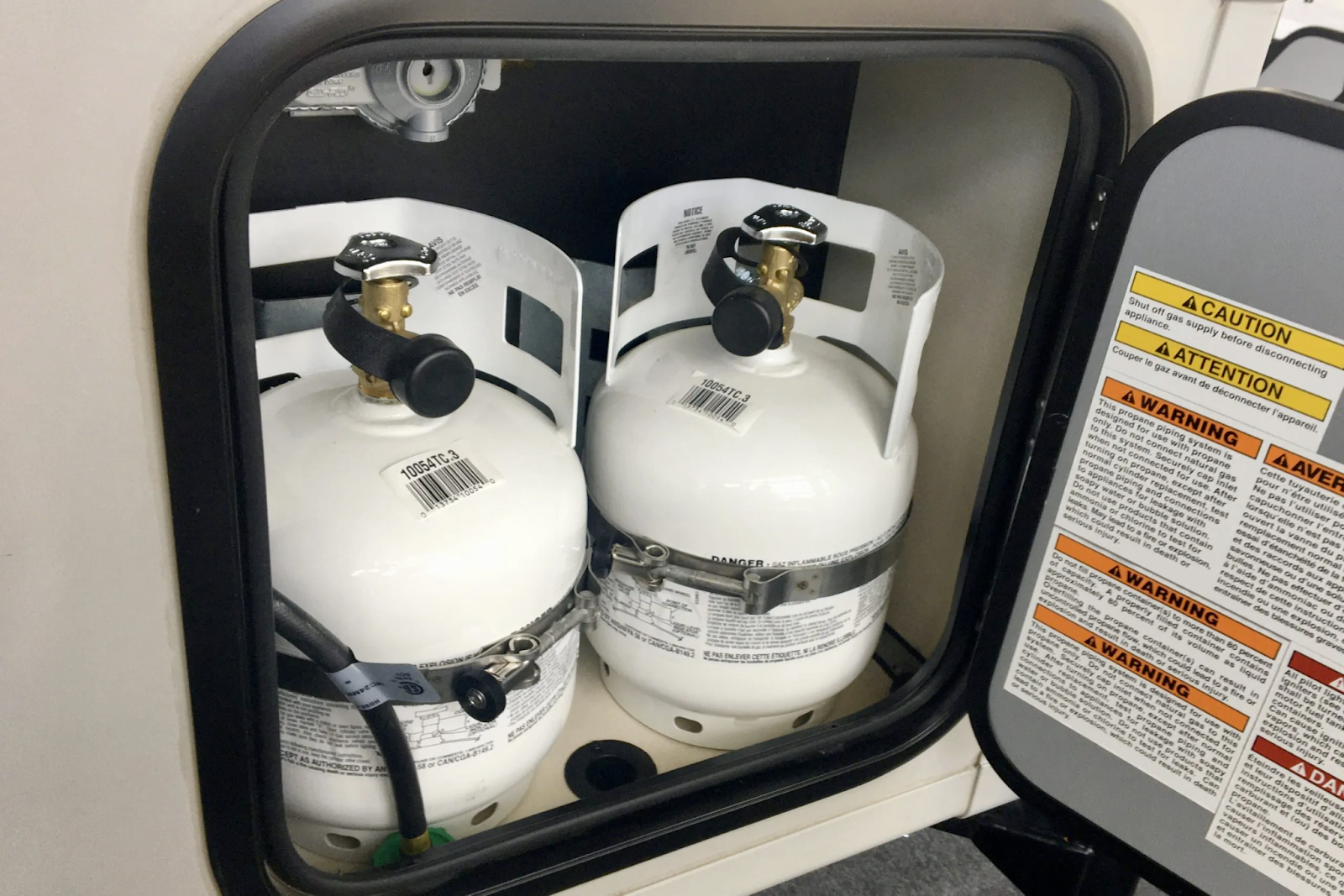
The All-Important tanks on the front of your travel trailer might just be the most versatile tool in your RV. Propane lets campers cook, run heat, make hot water, and power appliances, all without needing to connect to electricity. It is frequently recommended that campers who are connected to electricity use propane sparingly.

To maintain your propane tanks, make sure to do the following:

Keep watch of the age of your propane tanks. The manufacturing date is stamped on the tank, and it needs to be replaced or recertified after 12 years. 

Turn on your fridge the night before with propane, so it’s cold enough at the start of the camping trip. Switch to electric if you’re going to a campsite with a hookup.

Check the propane flow by “bleeding” the system. Turn on your stove and let the flames burn until they’re blue. This gets the air out of the propane lines, clearing out room for you to turn on other appliances. 

Greystone 21 Inch RV Gas Range, 12 Volt, LP | Way Interglobal RV Appliances

If you smell gas, turn off all propane tanks and RV appliances! The strong smell of propane gas indicates a leak, and you’ll need to replace the seal and tank. Do not attempt to repair leaks yourself, as propane is stored in its tank at -44 degrees, which will give you frostbite at the touch. 

Keep a working carbon monoxide alarm and propane safety alert inside your RV.

Avoid using propane in a moving vehicle, and always keep your RV well-ventilated when cooking or using propane inside. 

The RV Cooking Bible | I Heart RVing

For more RV tips, tricks, and news, follow our Pete’s RV Infoblog!

Essential RV Tips: Using Antifreeze

It’s that time of year again: time to dump lots of brightly colored liquid into all of your RV drains. You Need Antifreeze! What do you need to know about it?

RV and Marine antifreeze, conveniently packaged in the same bottle, surprisingly doesn’t protect against freezing, which isn’t necessarily harmful. It’s designed to prevent bursting, the plumbing damage that comes from ice freezing, expanding, and then rupturing. A rupture can result in gallons of pipe water flooding into the RV, causing a headache of damages. 

“RV antifreeze rated for -50 F and -75 F will start to freeze at around 20 F, but it won’t freeze to the burst point until -50 F or -75 F respectively.

In parts of the country where temperatures go into minus digits and stay there you should use the -100 F antifreeze for added protection. This type freezes at about -20 F, but provides burst protection to -100 F.” Said girlcamper.com. 

The most important part of using antifreeze is draining as much water or waste liquid from the pipes as possible. Antifreeze mixed with diluted water from an undrained pipe will burst far sooner than the temperature estimates on the bottle that assume there’s little to no water in the pipe. 

After winter is over, you can fill your pipes without water once again without worrying about draining the antifreeze, which is typically nontoxic. Of all the preparation your RV needs for winter, put antifreeze–and saving your pipes–at the top of the list. 

For more tips about winterizing your RV, check out our Winterization Tips with Pete’s RV Guru Randy Murray. 

Boondocking on a Budget

boondocking (noun) — RV camping without being connected to water, electricity, or sewage, usually in a remote or wild location. Synonyms: dry camping, free camping, wild camping.

What Is RV Boondocking? - Gander Outdoors

One of the most exciting ways to go RV camping, boondocking can be a great new way to spice up your summer. But are you prepared to ration supplies, go without WiFi, and camp off the grid? The Dyrt magazine has a comprehensive guide to all things boondocking, check it out below!

At Pete’s RV Center, we’re here for your RV adventures! Find your next RV or schedule a service appointment at petesrvcenter.com today!